Olga Kondratova
YA No. 3 (47) 2021 Cultural Traumas
YA No. 3 (47) 2021 Cultural Traumas
Couldn't load pickup availability
Introduction
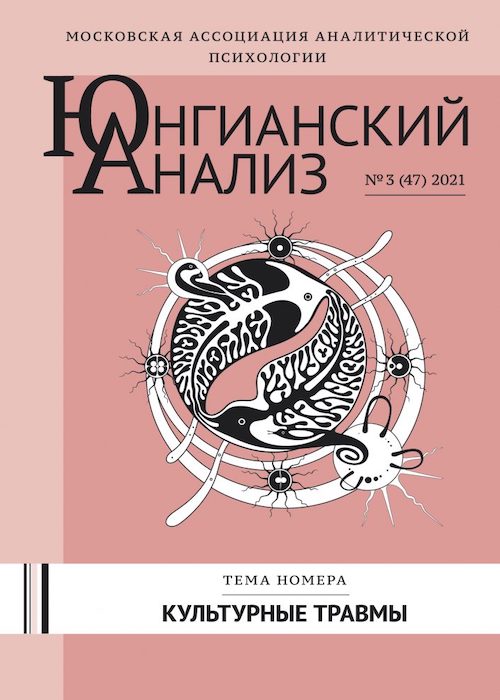
This issue is dedicated to cultural trauma. The illustration that introduces readers to this issue is a drawing by an eyewitness of September 11, 2001: an explosion, a rupture, a falling plane, a leap into an abyss, and only the figurines with clasped hands seem to testify that even in such a situation, connection is possible...
Trauma destroys the stability of life, the integrity of the world, and us. What we try to sew, glue, plaster, fix, or cover up, so as not to fall and not to get there. At the same time, it happens that we have been in it for a long time.
It is important that both personal and collective trauma are feelings and sensations, while cultural trauma is already a narrative, something discovered and named. All this gathers the energy of trauma and turns it into something whole, visible - into a story, allowing us to see its positive sides as well. The issue provides an opportunity to embark on this journey together with the authors. Most of its materials are reports presented at the XXIV International Conference of the MAAP "Cultural Traumas" (October 2020).
The articles by Elena Purtova and Natalia Pavlikova construct a container for understanding and experiencing trauma, allowing one not only to be inside the trauma but also next to it, revealing, among other things, its creative aspects.
In the topic of trauma, the individual is inseparable from the collective in its various aspects. Yulia Ovchinnikova and Dale Mathers examine the influence of cultural differences on individuation and the interaction between client and analyst. The articles include interesting clinical experience about inter- and intrapsychic encounters of different cultures in the analytical office. Our dependence on the traumas of past generations and ways of interacting with them – this line of analytical work is further developed in the articles by Nina Khrebtova and Kristina Schelinsky.
Yulia Sharipova, connecting current social traumas with the catastrophe of the collapse of the Soviet Union, and our Polish colleague Aleksandra Szczepaniak, analyzing the collective process of experiencing the catastrophe of the presidential plane crash near Katyn, write about the participation of trauma in the creation of collective identity. Collective traumas contain a lot of archetypal energy. How to work with them without drowning in archetypal experience? Stefan and Maria-Luise Alder talk about one of the methods - group-analytical conferences "Trialogue" - and we can once again be convinced of the healing power of symbolization.
In this issue, we bid farewell to Yulia Vlasova. The journal "Jungian Analysis" came into being and became a reality thanks to her faith and inspiration. She was one of the "parents" of this project and for many years was the scientific editor of the journal, carefully protecting its growth and development. We are left with a wound and gratitude.
Maria Loseva, Elena Purtova
Contents
Editorial
Point of View
Elena Purtova. "And then there was nothing": cultural trauma and its narratives.
Natalia Pavlikova. Collective and individual trauma in the analyst's office.
Traumas and Multicultural Analysis
Dale Mathers. Culture and Analysis.
Yulia Ovchinnikova. Cultural Trauma and the Archetype of the Wounded Healer in Multicultural Analysis.
Transgenerational Traumas
Nina Khrebtova. "The times are out of joint": ruptures, amnesias, ghosts, and Gods of traumatic timelessness in the therapeutic space.
Kristina Schelinsky. Transgenerational Transmission of Trauma: Analytical Examples.
Trauma and Cultural Complexes
Yulia Sharipova. A Source of Pride and Sorrow.
Aleksandra Szczepaniak. Catastrophe. Cultural complex in social and individual space.
Stefan Alder, Maria-Luise Alder. Development of processes in large groups at the psycho-historical conferences "Trialogue" 2015 and 2017.
Jungianism on the Map of Russia: The Urals
Nina Khrebtova: "Real great grief, true pain, loss of meaning of existence - this is, rather, to Jungians."
Yulia Ogarkova: "Jung turned out to be a life-giving source..."
Our Memory
Yulia Valeryevna Vlasova
Share