Olga Kondratova
LA No. 1 (36) 2019 Game
LA No. 1 (36) 2019 Game
Couldn't load pickup availability
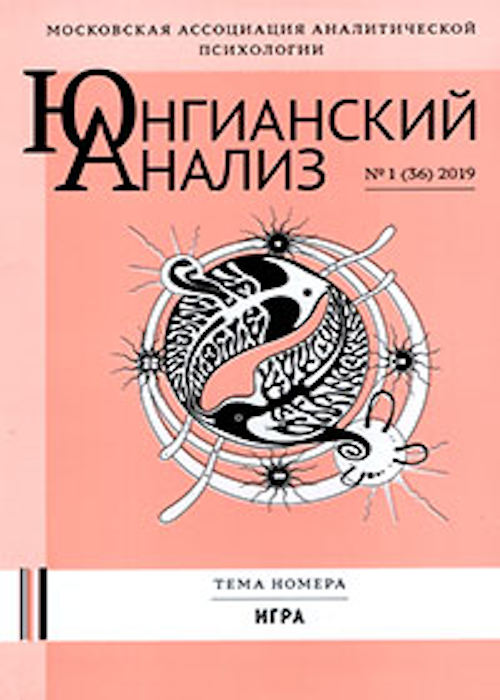
This issue is dedicated to one of the most ambiguous, yet beautiful and terrible, necessary and dangerous phenomena of human life: play. Love, play, and work are eternal components of human life, but are love and work possible without play? The introductory article of this issue, dedicated to a new science of play called ludology, addresses this question. The authors, researchers from the Ludology Institute in Berlin, assert that “play is a special type of intrinsically motivated behavior and thus strikingly differs from most of the tasks facing us in modern social life and work environment.” And certainly, play is an important part of the psychotherapeutic process—not only with children but also with adults. Terry Marks-Tarlow shows how playful elements are incorporated into the analysis of adult patients, how they develop an intersubjective space between client and therapist, and illustrates her ideas with clinical vignettes.
It is obvious that child analytical therapy is generally impossible without play. The main section of the issue explores the numerous possibilities of play in working with children: Svetlana Rudnitskaya describes the tasks that different types of play solve in the therapy of children of various ages, Irina Nikonova and Yulia Larina demonstrate the diagnostic and prognostic functions of play, calling it the guiding thread of the analytical process. Tina Belova examines the work of play in the context of a case analysis of a seven-year-old boy's therapy; she immerses us in the emotionally charged twists and turns of the analytical process so that this story reads in one breath.
However, play also has a dark side. Continuing the theme of the previous issue, we examine the prevalent gaming addictions. Yuri Sazhinev analyzes video game dependencies and attempts to find moments of development and individuation within them. Ani Weisel is not as optimistic in her research on various forms of media addiction. She reflects on how virtual reality and its capabilities influence the development of psychic reality, as well as the symbolic and cognitive functions of the personality. She believes that skills and abilities developed in play do not persist outside of play and illustrates her reflections with examples of psychotherapeutic work with gamers.
To conclude the issue, we offer a study of early infant experience. Maria Gudush, a breastfeeding consultant, provides a psychoanalytic explanation of the process occurring in the unconscious of a child when they show signs of refusing the breast. It turns out that this is a turning point in their development—this is where they first encounter the reality principle. One could say that the infant refusing the breast is trying to play, expressing their new desire, and the relationship with the breast helps them begin to think.
Thus, different faces of play await their readers.
Maria Loseva, Elena Purtova.
In this issue:
Point of View
Terry Marks-Tarlow. Play in Psychotherapy.
Jens Junge, Jonas Fossler, Steffen Tröger, Stefanie Talaska. Shaping the Game Process: Ludology as a Transdisciplinary Research Approach.
Play in Child Analysis
Svetlana Rudnitskaya. Play is Serious Business.
Irina Nikonova, Yulia Larina. The Guiding Thread. Playful Narrative in Therapeutic Discourse.
Tina Belova. Path to the Mother. Case Analysis of Psychoanalytic Therapy of a Seven-Year-Old Child.
Gaming Addictions
Anja Weisel. Virtual Reality and the Psyche.
Yuri Sazhinev. Soul in Virtual Reality. A Jungian Perspective on Computer Games.
Early Experience
Maria Gudush. What is the Child Crying About?
Abstracts
Share